 Reviews



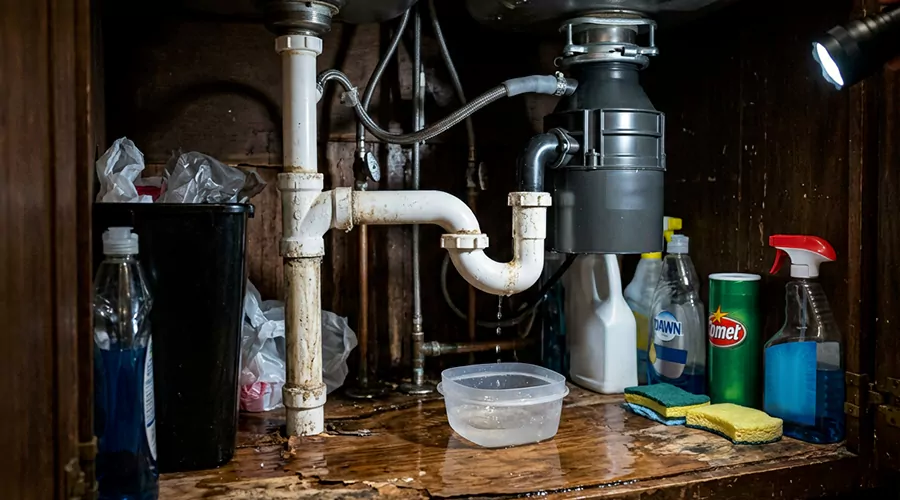
A kitchen sink leaking underneath usually comes from a loose drain joint, failed basket-strainer seal or pressurized supply connection. Kitchen sink repair costs about $150 to $500 in 2026, while broader pipe-leak repairs average about $500. The supplied keyword kitchen sink leaking underneath describes a location rather than one specific failed part. Water can travel along a pipe before it falls. The wettest spot inside the cabinet is therefore not always directly below the real source.
What Usually Leaks Under a Kitchen Sink?
The most common under-sink leak sources are drain joints and water-supply fittings. The basket strainer can also lose its seal. A garbage disposal adds more possible connections when one is installed. Checking when the leak appears is the fastest way to narrow the source.
- A loose P-trap joint often leaks only while water drains.
- A damaged supply line can drip while the sink is unused.
- The sink strainer can leak where the drain meets the basin.
- A faucet connection can send water down the supply hose.
- The garbage disposal can leak from its flange or discharge pipe.
Current 2026 under-sink guidance recommends separating pressurized supply leaks from gravity drain leaks before attempting repair.
How Does an Under-Sink Leak Get Worse?
A small drip can stay hidden for weeks because the cabinet catches the water. Repeated moisture can soften particleboard and damage stored items. A pressurized leak can progress faster because the water supply remains active even when nobody uses the sink.
| Leak Stage | What You Notice | Likely Concern | 2026 Cost Exposure |
|---|---|---|---|
| Early | Occasional drop | Loose joint or washer | Often low DIY cost |
| Repeating | Cabinet floor stays damp | Failed drain seal | Sink repair $150 to $500 |
| Constant | Water appears while unused | Supply-side leak | Pipe repair starts around $150 |
| Spreading | Cabinet or flooring is damaged | Larger plumbing failure | Up to $4,700 for complex pipe work |
Kitchen sink repair costs about $150 to $500 in 2026. Pipe leak repairs range from $150 to $4,700 with an average near $500. An early leak is cheaper to isolate because surrounding materials may still be dry.
What Warning Signs Reveal the Leak Source?
Under-sink leaks leave different clues depending on whether the water comes from a drain or pressurized connection. Start with timing. Then trace the wet path upward until you reach the first connection that becomes damp.
- Water appears only when the sink drains. A drain joint is more likely.
- Water appears while the faucet is off. A supply connection deserves attention.
- The P-trap stays wet. A slip nut or washer can be leaking.
- Water starts below the sink strainer. The drain-basket seal can be failing.
- A flexible supply hose is wet. The leak can be above the visible drop.
- The cabinet smells musty. Moisture has probably been present for some time.
- Particleboard looks swollen. Water damage is developing.
- The disposal body is wet. A disposal connection or housing can be leaking.
- Water appears during dishwasher drainage. Appliance plumbing can be involved.
- Mineral deposits form around a joint. A slow leak may have existed for weeks.
Current troubleshooting guides recommend drying everything first because water frequently travels away from its original source.
Why Does the Sink Leak Only When Water Drains?
A leak that appears only while water drains usually comes from the waste side of the sink. Loose slip joints can leak under flow. A damaged washer can also fail when the pipe fills. The basket strainer is another common drain-side source.
- Fill the sink partway.
- Do not run the faucet during the test.
- Release the stopper.
- Watch the plumbing from above.
- Start at the basket strainer.
- Move down the tailpiece.
- Then inspect the P-trap.
Water that appears only during this test points away from the pressurized supply side. The supplied keyword leak under kitchen sink fits this wider symptom.
Why Does It Leak When the Sink Is Not Being Used?
A leak that continues while the kitchen sink is unused usually points toward a pressurized water connection. Supply hoses and shutoff valves remain under pressure until the water is isolated.
- Dry both supply lines.
- Place tissue around each connection.
- Leave the faucet off.
- Wait several minutes.
- Check the tissue.
- A damp supply connection should be isolated with the appropriate shutoff valve.
- Do not keep tightening a damaged flexible hose.
- Replacement is safer than crushing an old fitting tighter.
Current under-sink guidance recommends prompt action when water continues with the faucet off because hidden damage can spread while the sink appears inactive.
Can the P-Trap Cause a Leak?
Yes. The P-trap uses slip joints and washers to create watertight connections. A washer can become misaligned after the trap is removed. A nut can also loosen after the piping is bumped inside the cabinet.
- Place a bucket below the trap.
- Dry every joint.
- Run water.
- Watch each slip connection.
- Tighten a loose nut by hand first.
- Use only modest extra force when needed.
- If the washer is cracked it should be replaced.
Overtightening plastic plumbing can distort or crack the fitting. A clogged drain can also increase water inside weak joints when the sink backs up.
Can the Sink Strainer Leak Underneath?
Yes. The basket strainer seals the drain opening where the sink basin connects to the tailpiece. A damaged gasket or deteriorated sealing material can let water travel down the outside of the drain assembly.
- Dry the underside of the sink.
- Close the stopper.
- Add several inches of water.
- Do not release the drain yet.
- Watch beneath the basket.
Water appearing during this holding test points toward the strainer seal rather than the P-trap. Current sink-repair guidance identifies worn strainer washers as a common source of drain-area leaks. The drain may need to be removed and resealed when the strainer connection has failed.
Can a Garbage Disposal Leak Underneath?
A disposal can leak at its sink flange or discharge connection. A dishwasher hose can also create water near the disposal. An internal disposal leak produces a different pattern because water can emerge from the housing itself.
- Turn off electrical power before inspection.
- Dry the disposal.
- Run water without switching it on.
- Check the upper flange.
- Then test the disposal briefly.
- Watch the side discharge pipe.
- Run the dishwasher separately.
If water appears from the disposal housing itself the unit can have an internal failure. Do not reach inside the grinding chamber during any inspection.
What DIY Test Can Find the Leak?
A staged paper-towel test can locate most visible kitchen sink leaks without special equipment. The key is testing one water path at a time so several sources do not become confused.
- Empty the cabinet.
- Dry every pipe.
- Place paper beneath the connections.
- Wait ten minutes without using water.
- Check for supply-side moisture.
- Then run the faucet.
- Next fill the sink.
- Release the water.
- Finally test the disposal or dishwasher separately.
Current expert guidance uses the same dry-first approach because it makes the first wet point easier to identify.
When Should You Call a Professional?
Professional help makes sense when a pressurized supply line or shutoff valve is leaking. It is also appropriate when the leak remains hidden after staged testing. Cabinet damage and damaged drain piping increase the need for a more involved repair. Kitchen sink repair costs about $150 to $500 in 2026. General plumber projects average about $341 with a common range of $182 to $501.
Professional diagnosis is reasonable when:
- A shutoff valve cannot stop the water.
- A supply hose continues leaking.
- The drain pipe is cracked.
- Cabinet damage is spreading.
- The disposal housing leaks.
- The exact source remains hidden.
Under-sink leak repair labor can also run about $50 to $200 per hour depending on the repair.
How Can You Prevent Under-Sink Leaks?
Regular inspection can catch small leaks before they damage the cabinet. Most under-sink plumbing is visible. That makes prevention easier than with pipes hidden behind walls.
- Check the cabinet every few months.
- Keep heavy storage away from the P-trap.
- Look for rust on metal fittings.
- Feel supply hoses for moisture.
- Inspect the cabinet after plumbing work.
- Respond to new musty odor.
A few minutes of inspection costs nothing. Complex pipe leak repairs can reach thousands of dollars once damage spreads beyond the cabinet.
Conclusion
A kitchen sink leaking underneath should be diagnosed by timing and the first wet connection. A drain leak normally appears while water is moving. A supply leak can continue while the sink is unused. Dry the entire cabinet before testing and check one water path at a time. If a valve or pressurized line has failed, professional repair can limit cabinet damage. Inspect beneath the sink this week for early moisture.
Frequently Asked Questions
Why is my kitchen sink leaking only when it drains?
A loose P-trap joint or failed basket-strainer seal is a common cause. Drain-side leaks appear when wastewater moves through the plumbing.
Can a clogged drain make the sink leak underneath?
Yes. Backup water can expose weak drain joints. The clog and leaking connection both need attention.
Why is the cabinet wet but all pipes look dry?
Water can travel along a pipe before dripping. Dry everything and test each connection separately.
Can a dishwasher cause water under the sink?
Yes. Its drain hose often connects near the kitchen drain or disposal.
Should I replace the whole sink because it leaks underneath?
Usually not. Most under-sink leaks come from plumbing connections or seals rather than the sink basin.